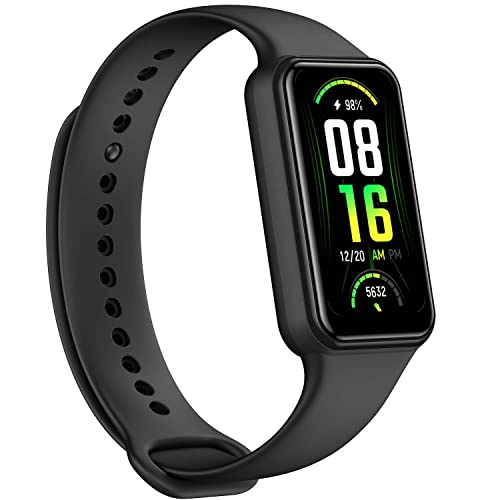
The Amazfit Band 7 wins on the combination that matters most at this price: an 18-day battery life that holds up in practice, paired with heart rate and SpO2 accuracy that competes with pricier trackers. If you specifically need GPS without carrying your phone, the Xiaomi Smart Band 8 Pro is the better fit.
Check price on AmazonThe budget fitness tracker category has gotten genuinely competitive, most of these now include AMOLED displays and multi-day battery life that would have been a premium feature just a few years ago. The real differences between them come down to a handful of specific trade-offs: connected versus built-in GPS, screen size versus battery drain, and how deep the companion app actually goes.
We compared sensor accuracy, battery life, and app quality using owner feedback alongside independent testing sources, since a spec sheet number for battery life rarely matches real-world use once GPS or an always-on display gets factored in.
How we rank
We ranked these trackers by aggregating owner reviews from Amazon, Best Buy, and Reddit, comparing accuracy data from independent testers, and evaluating features against price. See our method.
Quick picks
| Best for | Product | Who it suits |
|---|---|---|
| Best Overall | Amazfit Band 7 | People wanting the best all-round budget fitness tracker with a vibrant display and long battery life. |
| Best for GPS | Xiaomi Smart Band 8 Pro | Runners and outdoor exercisers who want built-in GPS without breaking the bank. |
| Best Value | Fitbit Inspire 3 | First-time tracker buyers wanting a trusted brand with a simple, effective experience. |
| Best for Health Metrics | Garmin Vivosmart 5 | Health-conscious users who want advanced metrics like Body Battery and stress tracking. |
| Best Lightweight | Amazfit Band 7 Pro | Users wanting a lightweight, barely-there tracker with core functionality. |
| Best for Battery Life | Huawei Band 8 | Users who rarely want to charge and want a slim, stylish band. |
| Best for Beginners | Xiaomi Smart Band 7 | Absolute beginners on a tight budget who want proven basic tracking. |
The picks, compared
Amazfit Band 7
A bright AMOLED display and 18-day battery life that’s genuinely rare at this price point, built around getting daily-use basics right rather than chasing extra features.
What owners say: Accuracy on step counts and sleep tracking is the consistent praise, several owners specifically note it rarely needs charging even with regular use. Occasional sync delays with the Zepp app come up, a minor complaint relative to everything else it gets right.
- Bright AMOLED display is easy to read outdoors
- Excellent 18-day battery life reduces charging frequency
- Accurate heart rate and SpO2 monitoring for daily use
- No built-in GPS
- relies on phone GPS for outdoor workouts
- Limited third-party app integrations

Xiaomi Smart Band 8 Pro
One of the few trackers in this price range with genuine built-in GPS rather than relying on a connected phone, aimed squarely at runners who want to leave their phone behind.
What owners say: Standalone GPS accuracy for tracking distance and pace is the specific reason runners choose this one, several report it matching phone GPS closely. The Mi Fitness app interface is less intuitive for deeper data analysis than competitors.
- Built-in GPS for standalone outdoor tracking
- Large, vivid AMOLED screen with always-on option
- Long battery life even with GPS use every few days
- SpO2 sensor is not as accurate during movement
- Limited third-party app support outside Mi Fitness
Fitbit Inspire 3
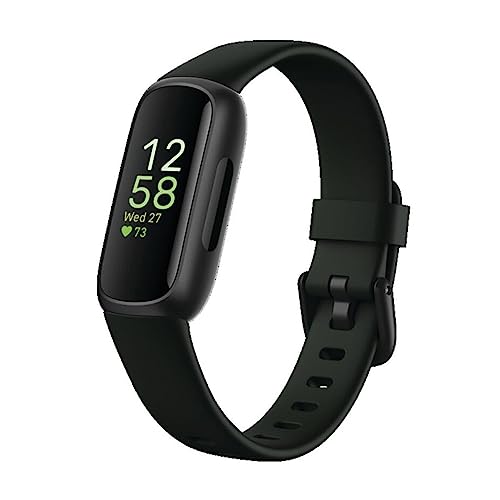
The most straightforward pick here, covering steps, sleep, heart rate, and stress with Fitbit’s established app rather than trying to compete on screen size or GPS.
What owners say: Ease of setup and comfort for 24/7 wear are the recurring themes, particularly among first-time tracker buyers. No built-in GPS and a dimmer non-AMOLED screen are the trade-offs for that simplicity.
- Trusted Fitbit platform with extensive health insights
- Lightweight and comfortable for 24/7 wear
- Stress management tools and guided breathing sessions
- No built-in GPS
- relies on phone GPS for runs
- Color display is dim compared to AMOLED rivals
Garmin Vivosmart 5
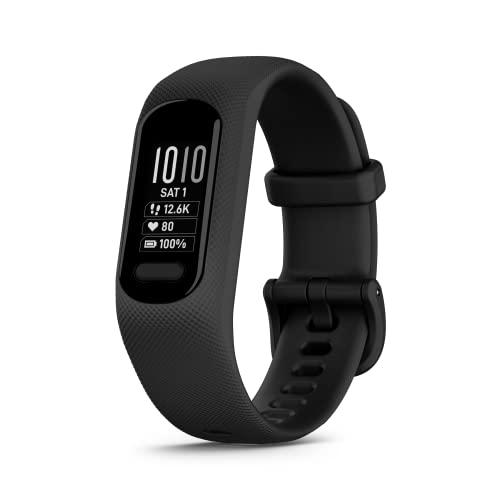
Built around Garmin’s health-metrics algorithms rather than display size, Body Battery and stress tracking are the actual reason to pick this over a flashier screen.
What owners say: The Body Battery feature specifically gets called out for helping plan daily activity around actual energy levels, a genuinely different use case than step-counting. The small, low-resolution screen is the clear trade-off for that data depth.
- Advanced health metrics like Body Battery and stress score
- Accurate heart rate and sleep tracking with Garmin'
- s algorithms
- Always-on display works well in direct sunlight
- Small, low-resolution screen feels dated
- No built-in GPS and no music controls
Amazfit Band 7 Pro
Built specifically to disappear on the wrist, at 20 grams this is the lightest tracker here, aimed at people who want sleep tracking without noticing they’re wearing anything.
What owners say: Comfort during sleep tracking specifically is the standout praise, distinct from the general comfort praise most other picks get. Step count occasionally over-registering during non-walking activity like driving is a recurring complaint.
- Extremely lightweight and comfortable for 24/7 wear
- Built-in GPS for basic route tracking without phone
- AMOLED display with good brightness and touch responsiveness
- GPS accuracy not as reliable as Xiaomi Smart Band 8 Pro
- Limited smartwatch features like notification responses

Huawei Band 8
The slimmest build in this lineup at under 9mm thick, paired with a 14-day battery life that holds up well even with regular use, built for people who want the tracker to feel more like jewelry than gear.
What owners say: Consistently hitting 12+ days on a charge is what owners report most, close to the advertised spec unlike some competitors. The Huawei Health app has weaker third-party integration than Fitbit or Garmin’s ecosystems.
- Exceptional 14-day battery life with typical use
- Very slim and light design (21 grams)
- Detailed sleep tracking with sleep quality scores
- No built-in GPS
- relies on phone GPS
- Huawei Health app lacks some third-party integrations
Xiaomi Smart Band 7
The genuine entry point here, a large AMOLED display and reliable basic tracking at the lowest price in this roundup, built for someone who isn’t sure yet if they’ll stick with a tracker.
What owners say: Ease of setup is the recurring praise from first-time buyers specifically. Heart rate lag during interval training is the known limitation, expected at this price point.
- Large, vivid AMOLED display at a very low cost
- Reliable step and sleep tracking for daily use
- Long battery life for a budget device
- No built-in GPS
- must carry phone for location
- Accuracy of SpO2 and heart rate declines during exercise
How to choose
- Sensor Accuracy. Look for trackers that use established optical heart rate sensors from companies like AMS or Silicone Labs. Owner reviews often highlight if the step count or heart rate drift during workouts; cross-reference with known testing sites for best results.
- Battery Life. Battery life varies from 5 to 18 days depending on display type and GPS use. Consider how often you are willing to charge; AMOLED displays with always-on mode drain faster, while grayscale screens last longer.
- Display Quality. AMOLED screens offer vibrant colors and better readability outdoors, but they consume more battery. If you exercise outdoors frequently, prioritize brightness over size. Grayscale screens are more battery-friendly but less engaging.
- GPS Integration. Built-in GPS is essential for runners and cyclists who want accurate route mapping without a phone. If you always carry your phone, connected GPS suffices. Check owner reviews for GPS lock speed and accuracy in urban canyons.
- App Ecosystem. The companion app determines how you interact with your data. Fitbit offers the most intuitive dashboard, while Garmin Connect provides deep analytics. Ensure the app supports your smartphone OS and offers the health insights you value.
Frequently asked questions
What is the best budget fitness tracker overall in 2026?
The Amazfit Band 7 is our overall pick for its bright AMOLED display, accurate heart rate monitoring, and exceptional 18-day battery life. It balances features and price effectively, making it a top choice for most users.
Do budget fitness trackers have GPS?
Some budget models include built-in GPS, such as the Xiaomi Smart Band 8 Pro and Amazfit Band 7 Pro. Others rely on connected GPS using your phone's GPS. For accurate outdoor route tracking without a phone, choose a model with standalone GPS.
How accurate are budget fitness trackers for heart rate?
Optical heart rate sensors in budget trackers are generally accurate for resting heart rate and steady-state activities. During high-intensity interval workouts, accuracy may decrease compared to chest straps. Owner reviews often note that brands like Fitbit and Garmin perform better.
Which budget tracker has the best battery life?
The Huawei Band 8 offers up to 14 days of battery life with typical use, while the Amazfit Band 7 reaches up to 18 days. The Xiaomi Smart Band 8 Pro provides about 14 days but less with GPS active.
Can budget fitness trackers track sleep accurately?
Many budget trackers provide detailed sleep tracking with stages (light, deep, REM). Owner reviews for the Fitbit Inspire 3 and Huawei Band 8 consistently report accurate sleep patterns that match personal experience. However, no tracker is clinical-grade.
What is the best budget fitness tracker for runners?
For runners, the Xiaomi Smart Band 8 Pro is ideal due to its built-in GPS, accurate pace tracking, and long battery life. It offers route maps directly on the wrist, making it a solid choice without a high price tag.
The verdict
The Amazfit Band 7 delivers the best overall balance of battery life, accuracy, and price. Choose the Xiaomi Smart Band 8 Pro specifically if you run without your phone, and the Fitbit Inspire 3 if you want the simplest possible experience backed by an established app.