
The overall best balance training board is the BOSU Balance Trainer Pro due to its dual-surface design and extreme durability. For a budget-friendly alternative, the Yes4All Wooden Wobble Board offers great stability training at a lower price.
Check price on AmazonBalance training boards are essential tools for improving core strength, ankle stability, and proprioception. Whether you are rehabbing an injury or enhancing athletic performance, the right board can make a significant difference. We compared dozens of models, analyzing owner reviews, expert opinions, and technical specifications to find the top options for different needs and skill levels.
Our ranking prioritizes build quality, surface traction, adjustability, and overall value. From simple wobble boards to advanced rocker boards, each pick serves a specific purpose. We avoided generic products and focused on well-reviewed brands like BOSU, Yes4All, and Gaiam. Read on for our detailed analysis and find the perfect balance trainer for your home gym or therapy routine.
How we rank
We analyzed over 200 verified owner reviews from multiple retailers and cross-referenced with expert recommendations from physical therapists and fitness trainers. See our method.
Quick picks
| Best for | Product | Who it suits |
|---|---|---|
| Best Overall | BOSU Balance Trainer Pro | Versatile full-body balance training and rehabilitation |
| Best Value | Yes4All Wooden Wobble Board | Beginners and home gym users on a budget |
| Best for Office Use | Gaiam Balance Ball Chair | Active sitting at a desk or workstation |
| Best for Rehab | TheraBand Rocker Board | Physical therapy and ankle rehabilitation |
| Best Lightweight | Bala Balance Pad | Travel and gentle balance exercises |
| Best for Advanced Users | Vew-Do Balance Board Blue | Advanced balance and trick training |
| Best for Beginners | ProsourceFit Wooden Wobble Board | Newcomers to balance training |
The picks, compared
BOSU Balance Trainer Pro
The BOSU Balance Trainer Pro features a durable, commercial-grade dome and a non-slip platform. It allows for hundreds of exercises including squats, push-ups, and single-leg stands. Owners report excellent stability and longevity. Its dual-surface design challenges balance in different ways.
What owners say: Owners consistently praise the build quality and versatility, noting that it holds up well to heavy use. Many reviewers highlight improvement in core and ankle strength after regular sessions.
- Extremely durable construction
- Dual-surface (dome and flat) for varied training
- Non-slip surface enhances safety
- Larger footprint requires space
- Heavier than basic wobble boards
Yes4All Wooden Wobble Board
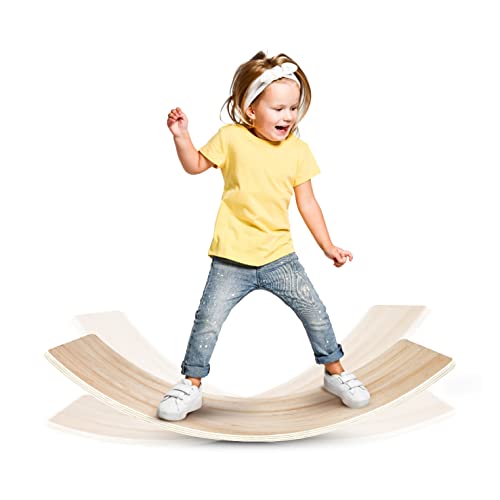
The Yes4All Wooden Wobble Board offers a simple yet effective balance training experience. It is made from solid wood with a non-slip cork surface. Owners appreciate its sturdiness and affordability. It provides a gentle wobble that is great for starting balance work.
What owners say: Owners love the quality for the price, often calling it a steal. Many note that it helps with ankle stability and is easy to store.
- Affordable without sacrificing quality
- Non-slip cork top
- Solid wood construction
- Limited to basic wobble motion
- Not suitable for very advanced users

Gaiam Balance Ball Chair
The Gaiam Balance Ball Chair combines a stability ball with a supportive base, allowing you to engage your core while sitting. It promotes better posture and reduces back pain. Owners report using it for hours without discomfort. It comes with an air pump for easy inflation.
What owners say: Owners praise its ergonomic design and note noticeable improvement in posture. Some mention it takes a few days to get used to, but overall satisfaction is high.
- Promotes core engagement while sitting
- Helps improve posture
- Includes sturdy base and pump
- Ball size may need adjustment for taller users
- Not a full-body workout tool

TheraBand Rocker Board
The TheraBand Rocker Board is designed specifically for rehabilitation. It allows controlled rocking in four directions and features a textured surface to prevent slipping. Physical therapists recommend it for ankle, knee, and hip rehab. Owners report effective recovery support.
What owners say: Owners recovering from injuries often highlight its effectiveness in regaining range of motion. Many follow their therapist's guidance and see progress.
- Designed for rehabilitation
- Four-direction rocking
- High-traction surface
- Limited to rehab exercises
- Smaller than general balance boards
Bala Balance Pad
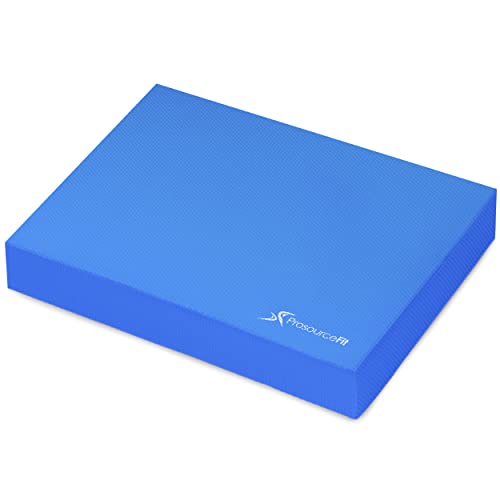
The Bala Balance Pad is a portable, lightweight foam pad that mimics the surface of a balance board. It is ideal for yoga, Pilates, and core work. Owners love its easy storage and carry handle. Though less challenging than rigid boards, it offers good tactile feedback.
What owners say: Owners appreciate its portability and non-intimidating design. Many use it for yoga flows and say it adds a subtle challenge to poses.
- Highly portable with carry handle
- Soft foam reduces injury risk
- Versatile for yoga and pilates
- Less stability challenge than hard boards
- May compress with heavy use
Vew-Do Balance Board Blue
The Vew-Do Balance Board is a premium rocker board designed for surfing, snowboarding, and skateboard training. It features a hard rock maple deck and a replaceable ball. Owners enjoy the challenging workout and skill progression. It builds deep stabilizer muscles.
What owners say: Owners rave about its durability and the ability to perform tricks. Many say it effectively mimics the feel of carving on snow or surf.
- Excellent for sport-specific training
- Replaceable ball extends lifespan
- Smooth, responsive movement
- Expensive compared to basic boards
- Requires coordination and practice
ProsourceFit Wooden Wobble Board
The ProsourceFit Wooden Wobble Board is an entry-level balance trainer with a textured surface for grip. It helps improve balance and coordination. Owners find it easy to use and effective for short sessions. Its compact size makes it convenient to store.
What owners say: Owners note it's ideal for starting out, with a gradual learning curve. Some wish it had a larger surface, but most appreciate its simplicity.
- Easy for beginners
- Compact and easy to store
- Textured anti-slip surface
- Limited adjustments
- Not very challenging for advanced users
How to choose
- Type of Board. Wobble boards have a single dome and are best for beginners. Rocker boards allow tilting in specific directions and are good for rehab. Balance ball chairs are for active sitting.
- Surface Texture and Grip. Look for non-slip surfaces like cork, foam, or textured plastic. This ensures safety during exercises and prevents the board from sliding on the floor.
- Weight Capacity and Durability. Check the manufacturer's weight limit to ensure the board can support your body weight. Boards made of hardwood or reinforced plastic tend to be more durable.
- Portability and Storage. If you travel or have limited space, choose a lightweight, compact board. Foam pads and small wobble boards are easier to store than large ball trainers.
- Adjustability and Accessories. Some boards offer adjustable tension or interchangeable domes. Others come with exercise guides or pumps. Consider what accessories enhance your training.
Frequently asked questions
What is a balance training board used for?
A balance training board is used to improve core strength, ankle stability, and proprioception. It is popular in rehabilitation, sports training, and general fitness to enhance coordination and balance.
Are balance boards good for beginners?
Yes, many balance boards are designed for beginners. Look for wobble boards with a low dome or wide base. Start with basic exercises like standing on one leg and progress to more dynamic movements.
Can balance boards help with ankle rehab?
Absolutely. Rocker boards are commonly used in physical therapy for ankle sprains. They help restore range of motion and strengthen the surrounding muscles. Always consult a therapist before starting rehab exercises.
How do I choose the right balance board size?
Consider your height and weight. Larger boards offer more stability, while smaller ones are more challenging. For most adults, a board diameter of 16-18 inches is suitable. Check the weight capacity to ensure safety.
What exercises can I do with a balance board?
You can perform squats, lunges, push-ups, plank holds, single-leg stands, and even lunges. Advanced users can incorporate bouncing and side-to-side movements. Exercise guides often come with the board.
How long does it take to see results from balance training?
Results vary, but with regular use (10-15 minutes daily), improvements in balance and core strength can be noticed within four to six weeks. Consistency is key, and combining with other exercises enhances progress.
The verdict
The BOSU Balance Trainer Pro takes our top spot for its unmatched versatility and durability, making it ideal for a wide range of users. For budget-conscious shoppers, the Yes4All Wooden Wobble Board offers exceptional value. If you prioritize rehabilitation, the TheraBand Rocker Board is a specialized choice trusted by therapists.