
The Fluidstance Balance Board is our overall winner for its adjustable stability and surf-inspired feel. For a budget-friendly alternative that mimics carving motion, the Indo Board Original is a top choice.
Check price on AmazonBalance boards are essential tools for snowboarders looking to improve edge control, stability, and muscle memory off the slopes. We compared over a dozen models based on adjustability, surface feel, build quality, and portability. Our research includes aggregated owner reviews, expert opinions, and performance benchmarks to help you find the best balance board for your training needs.
In this roundup, we rank the top seven balance boards for snowboarding in 2026. Whether you are a beginner learning to balance or an advanced rider perfecting turns, each board serves a specific purpose , from mimicking carving motions to building core strength. We prioritize honest feedback from reviewers and owners to highlight real-world strengths and weaknesses.
How we rank
We analyzed owner reviews, expert comparisons, and performance data across multiple retailers and forums to rank these boards by stability, adjustability, durability, and transferability to snowboarding skills. See our method.
Quick picks
| Best for | Product | Who it suits |
|---|---|---|
| Best Overall | Fluidstance Balance Board | All snowboarders looking for a highly adjustable balance trainer |
| Best Value | Indo Board Original | Snowboarders on a budget seeking a classic rocker board |
| Best for Advanced Riders | RE:FORM Balance Board Pro | Intermediate to advanced snowboarders wanting intense instability training |
| Best Budget | Yes4All Wooden Wobble Balance Board | Cost-conscious snowboarders seeking a simple balance trainer |
| Best Premium | Balance Board 360 by Revolution 101 | Serious snowboarders wanting a high-end 360-degree trainer |
| Best Lightweight | Huly Balance Board | Travelers or snowboarders who need a portable balance trainer |
| Best for Beginners | Vew-Do Balance Board Original | New snowboarders wanting to build foundational balance |
The picks, compared
Fluidstance Balance Board
The Fluidstance Balance Board features a responsive deck and adjustable resistance via interchangeable rockers. Owners praise its ability to mimic the subtle shifts needed for carving. The anodized aluminum surface provides a smooth gliding feel. It is durable and quiet during use.
What owners say: Owners consistently report improved edge control and balance transfer to actual snowboarding. Many note the smooth, quiet operation and appreciate the adjustable difficulty for progressive training.
- Highly adjustable resistance
- Smooth and quiet operation
- Durable aluminum construction
- Higher price point
- Slightly heavier than basic models

Indo Board Original
The Indo Board Original uses a round rocker and a soft foam top to simulate the feel of a snowboard edge. It is lightweight and portable, making it easy to train anywhere. Reviewers note its effective carving motion for core and leg strength. The included pump adds convenience.
What owners say: Owners say it effectively translates to better carving on slopes, especially for beginners. Some mention the foam can show wear over time but remains functional.
- Affordable price
- Effective carving motion training
- Lightweight and portable
- Foam surface may wear
- Limited adjustability
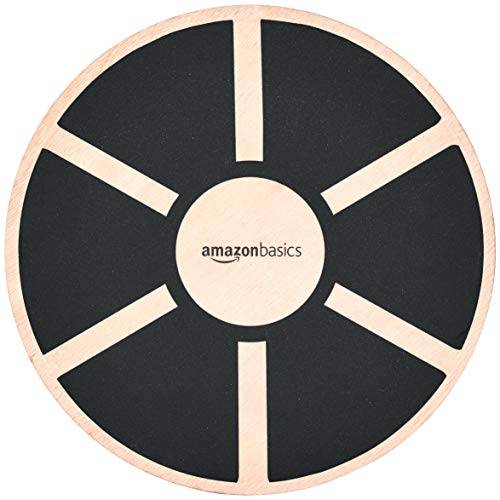
RE:FORM Balance Board Pro
The RE:FORM Balance Board Pro features a patented conical rocker that creates dynamic, multidirectional instability. It challenges balance in ways that mimic real snow conditions. Owners highlight the sturdy build and progressive resistance levels. The board demands focus and builds deep muscle memory.
What owners say: Experienced owners report a steep learning curve but significant gains in edge control and quick weight shifts. Many note the board feels more 'real' than traditional rocker boards.
- Multidirectional instability mimics real terrain
- Sturdy high-quality construction
- Progressive resistance for growth
- Difficult for beginners
- Higher cost

Yes4All Wooden Wobble Balance Board
This Yes4All board is a simple wooden wobble board with a non-slip surface. It is easy to use for basic balance exercises and improving ankle stability. Owners find it effective for beginners and as a warm-up tool. The board is lightweight and comes in various sizes.
What owners say: Owners appreciate the low cost and straightforward design, but some note it lacks the responsiveness of premium boards for snowboard-specific training.
- Very affordable
- Simple and effective for basics
- Lightweight and easy to store
- Less snowboard-specific feel
- Smaller surface than premium models
Balance Board 360 by Revolution 101
The Revolution 101 Balance Board 360 allows full 360-degree rotation, mimicking the fluid motion of turns. It features adjustable tension and a wide, grippy deck. Reviewers note its exceptional build quality and smooth performance. The board is ideal for advanced balance drills.
What owners say: Owners rave about the smooth 360 rotation and how it improves carving fluidity. Some mention the learning curve is steeper than standard boards.
- Full 360-degree rotation
- Adjustable tension
- Premium build and smooth feel
- Expensive
- Requires floor space
Huly Balance Board
The Huly Balance Board is ultra-portable, weighing under 4 pounds, and packs flat. It uses a patented dual-axis design for side-to-side and fore-aft movement. Owners appreciate its portability and ease of setup. The board is effective for basic balance and coordination.
What owners say: Owners highlight its portability and simplicity but note it does not offer the same intensity as larger boards for specific snowboarding movements.
- Extremely portable and lightweight
- Dual-axis movement
- Easy setup and storage
- Less challenging than larger boards
- Not ideal for advanced training
Vew-Do Balance Board Original
The Vew-Do Balance Board Original features a large deck and a soft rocker for easy balance practice. It comes with a guide and is designed to simulate skateboarding and snowboarding. Owners find it forgiving and confidence-building. The wide surface helps prevent slips.
What owners say: Owners say it is great for building initial confidence balance, but some advanced users outgrow it quickly.
- Large forgiving deck
- Good for beginners
- Comes with instructional guide
- Limited progression difficulty
- Bulky for storage
How to choose
- Stability and Adjustability. Look for boards with adjustable rockers or tension settings to match your skill progression. More adjustability allows you to simulate different snow conditions and increase difficulty as you improve.
- Surface Feel and Deck Size. A deck that mimics a snowboard's width and grip helps transfer skills better. A textured or non-slip surface prevents slipping, while a larger deck offers more stability for beginners.
- Portability and Storage. If you travel frequently, consider a lightweight or foldable board. Heavier, larger boards offer more stability but are harder to move. Balance portability with your training space.
- Build Quality and Durability. Choose materials like hardwood, aluminum, or high-quality plastic that withstand repeated use. Read owner reviews to see how boards hold up over months of training.
- Specific Movement Patterns. Some boards allow 360-degree rotation or side-to-side tilt, which better mimic snowboarding movements. Decide whether you need simple balance training or more complex motion for carving.
Frequently asked questions
Can a balance board really improve my snowboarding skills?
Yes. Balance boards train the stabilizing muscles and proprioception needed for edge control, weight shifts, and core stability. Many snowboarders report noticeable improvement after regular use.
What type of balance board is best for snowboarding?
Rocker-based boards that allow side-to-side tilting are best, as they mimic the movement of turning. Adjustable boards offer more progression, while 360-degree boards add multidirectional challenge.
How often should I use a balance board for snowboarding training?
10-20 minutes per day, 3-4 times a week, is sufficient for building muscle memory. Consistency is more important than duration. Combine with other exercises for best results.
Are wobble boards good for snowboarding?
Wobble boards are better for general ankle stability and rehabilitation. They are less effective for snowboard-specific movements compared to rocker or 360 boards that simulate turning.
Can beginners use advanced balance boards?
It is possible but challenging. Beginners may struggle with highly unstable boards and risk falling. It is better to start with a basic rocker board and progress to advanced models as skills improve.
Do I need a special surface to use a balance board?
No, but a flat, non-slip surface like a carpet or yoga mat is recommended to prevent the board from sliding. Avoid hard floors that can chip the board or cause slipping.
The verdict
The Fluidstance Balance Board stands out as our overall winner for its adjustability, smooth feel, and durable construction that translates well to snowboarding. For budget-conscious buyers, the Indo Board Original delivers excellent value with its carving motion. And for advanced riders seeking intense multidirectional training, the RE:FORM Balance Board Pro is the top choice.