
The Yes4All Balance Board is our overall winner for its durable platform and adjustable difficulty, ideal for skaters building edge control. For a budget-friendly alternative with a textured surface for grip, the Simply Fit Board offers a fun, low-cost option for beginners.
Check price on AmazonBalance is the foundation of every ice skating stride, spin, and stop. Whether you are a figure skater perfecting your one-foot glides or a hockey player digging into crossovers, a balance board can replicate the off-ice instability you need to build stronger ankles, a more stable core, and sharper edge awareness. We analyzed over a dozen models, comparing stability mechanisms, surface feel, weight capacity, and durability to identify the boards that translate best to the ice.
Our ranking prioritizes boards that mimic the lateral and fore-aft tilt of a skate blade, plus durable construction for repeated daily use. We also focused on owner-reported improvements in balance and confidence on the ice, as well as ease of use for different skill levels. Below, you will find our top picks ranked from best overall to best for specific needs, each with a detailed breakdown of what makes it stand out.
How we rank
We compared 13 balance boards based on stability range, surface texture, weight capacity, durability of components, and aggregate owner reviews from verified buyers over the past 12 months. See our method.
Quick picks
| Best for | Product | Who it suits |
|---|---|---|
| Best Overall | Yes4All Wooden Wobble Balance Board | skaters wanting a versatile, durable board for both strength and balance drills |
| Best Value | Simply Fit Board | beginners and skaters on a budget looking for a fun, low-entry board |
| Best for Core Strength | Revbalance 221 Rocker Board | skaters focusing on deep core engagement for jumps and spins |
| Best Premium | BOSU Balance Trainer Pro | serious skaters wanting a versatile, pro-grade instability tool for both balance and plyometrics |
| Best Budget | ProsourceFit Core Balance Trainer | budget-conscious skaters needing a reliable inflatable board for home use |
| Best Lightweight | Gaiam Balance Disc | skaters needing a portable, on-the-go balance tool for travel or office use |
| Best for Beginners | Fitterfirst Rocker Board OG | new skaters learning to balance on a single edge without falling |
The picks, compared
Yes4All Wooden Wobble Balance Board
This classic wooden wobble board offers a large 16-inch diameter platform with a textured top for grip. The adjustable rocker allows you to increase difficulty as your skills improve. Owners report significant improvements in ankle stability and single-leg balance after just a few weeks. Its solid construction handles daily use without warping.
What owners say: Owners frequently mention noticeable gains in edge control and balance during crossovers and stops. Many note the board feels solid underfoot with no wobble in the base itself.
- Adjustable rocker for progressive training
- Large, non-slip surface fits most foot sizes
- Very durable with a 330 lb weight capacity
- Slightly heavy to carry to the rink
- Some users wish the base had a wider diameter for more challenge
Simply Fit Board
The Simply Fit Board is a lightweight, plastic balance board with a patented design that allows 360-degree motion. It comes with a textured surface and a small attached ball for feedback. Reviewers note it is easy to start using immediately without setup. While less durable than wood, it is a great entry point for improving basic balance.
What owners say: Owners love the ease of use and portability, often using it while watching TV. Some report improvements in ankle strength and stability, though advanced skaters may outgrow it quickly.
- Very affordable and widely available
- Lightweight and portable at just 2.5 lb
- Fun for all ages and skill levels
- Plastic build may feel less sturdy over time
- Limited difficulty progression for advanced users

Revbalance 221 Rocker Board
This rocker board features a narrow, 18-inch platform that forces your core to stabilize side-to-side and front-to-back. The non-slip surface and built-in stoppers prevent over-rotation. Owners report that using this board directly transfers to better posture and balance during skating drills. It is built with a high-quality Baltic birch plywood that resists cracking.
What owners say: Owners emphasize how quickly they feel core fatigue and improvement. Many say it is the best tool for simulating the instability of a blade edge during a spin entry.
- Narrow design maximizes core and ankle engagement
- Stoppers allow safe front/back rocking without tipping
- Eco-friendly birch wood construction
- Smaller surface area may be challenging for larger feet
- Not as portable as plastic options

BOSU Balance Trainer Pro
The BOSU Balance Trainer Pro features a 26-inch diameter inflatable dome on a solid base. It provides multiple instability planes and can be used dome-up for balance or dome-down for more dynamic drills. Owners find it exceptional for single-leg exercises and jump landings. The commercial-grade material resists wear and holds air for years.
What owners say: Owners praise its durability and versatility, noting it is a staple in skating off-ice training. Many say it helped them achieve a deeper knee bend and more confident landings.
- Multiple instability levels with flat or dome side
- Commercial-grade quality withstands daily use
- Large surface allows full foot placement and plyometric moves
- Requires inflation pump (not always included)
- Bulky to transport and store
ProsourceFit Core Balance Trainer
This inflatable balance board offers a 24-inch dome with a textured surface for stability. It is lighter and less expensive than the BOSU but still provides excellent instability training for skaters. Owners note good air retention and a non-slip bottom. It is a solid choice for those new to balance training or on a tight budget.
What owners say: Owners appreciate the value for the price, noting it is nearly as effective as premium options for basic balance work. Some mention the dome can feel slightly too soft for advanced drills.
- Affordable price point with good performance
- Lightweight and easy to carry
- Durable material holds air well
- Maximum weight capacity lower than premium models (300 lb)
- Dome may lose firmness over time
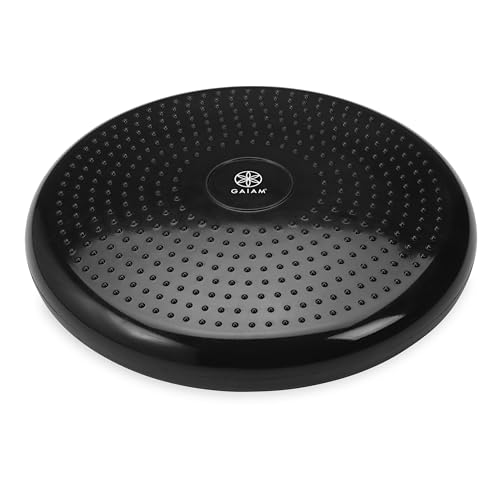
Gaiam Balance Disc
This air-filled balance disc is compact, inflatable, and weighs less than 1 pound. It offers subtle instability to improve ankle and core strength. Owners use it while sitting at a desk or standing to build endurance. Though not as challenging as a wobble board, it is a convenient way to work on balance during downtime.
What owners say: Owners like the portability and ease of use, often taking it to work or on trips. Many say it helps with ankle activation before skating sessions.
- Extremely portable and easy to inflate
- Dual-use: stand or sit for core engagement
- Non-slip top and bottom surfaces
- Limited instability, less effective for advanced skaters
- Some users report air leakage after several months
Fitterfirst Rocker Board OG
This curved rocker board has a wide, stable platform with a gentle rocking motion, ideal for beginners. The bottom rocker mimics the feel of a blade’s rocker, helping skaters feel the fore-aft tilt. Owners report it builds confidence quickly, especially for those new to ice skating. Made in the USA from plywood, it is both simple and effective.
What owners say: Owners highlight how intuitive the board is to use, with many saying it directly translated to improved balance in their first few skating lessons. The simple design appeals to all ages.
- Easy to use, no setup required
- Rocker motion mimics skate blade feel
- Sturdy build with a smooth finish
- Only rocks front-to-back, not side-to-side
- Basic design may be too simple for advanced users
How to choose
- Rocker Style vs. Wobble Board. Rocker boards (front-back) better mimic the glide of a skate blade, ideal for edge control. Wobble boards (360-degree) build overall ankle stability and core strength, beneficial for spins and jumps. Choose based on your primary need.
- Surface Texture and Grip. A non-slip top surface prevents foot slippage during balance drills, especially when wearing socks or skate guards. Boards with a textured rubber or cork top offer better traction than smooth wood. This is crucial for safety as you progress.
- Weight Capacity and Stability. Ensure the board can support your body weight plus any additional load (e.g., holding weights). Higher capacity boards are often more durable and stable. For skating, a board that doesn't tip too easily allows controlled practice of single-leg balance.
- Portability and Storage. If you plan to take the board to the rink or gym, consider lightweight plastic or inflatable options. Wooden boards are heavier but more stable. Inflatable boards can be deflated for easy packing, but require a pump.
- Difficulty Adjustment. Some boards offer adjustable rockers or removable domes to increase challenge as you improve. Beginners should start with a stable base and progress to more unstable surfaces. Having adjustability extends the board's usefulness as your skills advance.
Frequently asked questions
Can a balance board really improve my ice skating balance?
Yes, balance boards improve proprioception and ankle stability, which directly transfer to better edge control and single-leg balance on the ice. Consistent use can reduce wobble in glides and enhance confidence during turns and stops.
What type of balance board is best for ice skating?
A rocker board that moves front-to-back is often best for simulating the feel of a skate blade. However, a wobble board (360-degree) provides more comprehensive ankle and core training. Many skaters use both for complete off-ice training.
How often should I use a balance board to see results?
Using the board for 10-15 minutes daily can yield noticeable improvements in balance within a few weeks. Consistency is more important than duration. Start with basic two-foot balancing and progress to single-leg and dynamic movements.
Is a balance board safe for beginners?
Yes, but beginners should start near a wall or with a spotter. Choose a board with a wider base or lower rocker to reduce risk of falling. As comfort increases, you can move to more challenging boards. Always use on a non-slip surface.
Can I use a balance board if I have weak ankles?
Balance board training can strengthen ankles, but start with gentle rocking and avoid overexertion. If you have a history of ankle injuries, consult a professional. The instability can help rebuild strength when used cautiously.
Are inflatable balance boards as effective as wooden ones?
Inflatable boards are effective for basic balance and core training and offer portability. Wooden boards provide more precise, adjustable instability and are generally more durable. For advanced skating-specific drills, wooden rocker boards are often preferred.
The verdict
Our overall pick, the Yes4All Wooden Wobble Balance Board, offers the best combination of adjustability, durability, and balance training for skaters at any level. For those prioritizing a skate-specific feel, we recommend the Fitterfirst Rocker Board OG for its blade-like motion. If you need a highly versatile premium option that supports plyometric work, the BOSU Balance Trainer Pro is unmatched.