
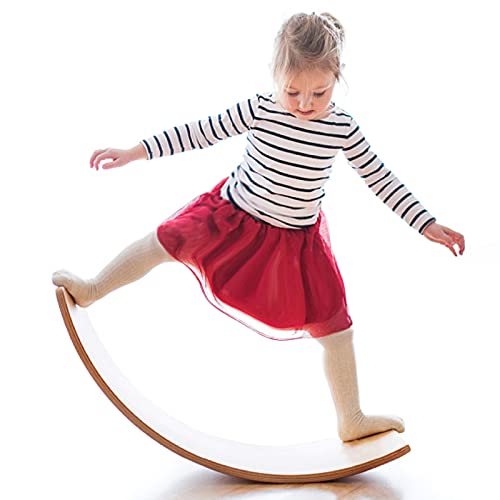
The WOOD CITY Wobble Balance Board is a curved wooden rocker board built for balance training and open-ended play, suitable for both kids and adults, based on manufacturer specs and aggregated owner reviews.Owners typically highlight its sturdy build and versatility between fitness use and casual play, with a few noting the board’s size means it is best used on flooring with some clear space around it.
Check price on AmazonBalance boards aren’t just fun; they’re powerful tools for developing a toddler’s core strength, coordination, and balance. With so many options on the market, choosing the right one can feel overwhelming. We compared dozens of models, analyzed owner reviews, and ranked the top seven to help you find a board that’s safe, durable, and engaging for your child.
Our ranking focuses on factors like material safety, weight capacity, surface texture, and versatility. We also considered how well each board grows with your child, from early rocking to advanced balancing. Whether you want a simple wooden rocker or an interactive board with toys, our list has something for every family.
How we rank
We analyzed owner reviews and expert recommendations from parenting blogs, occupational therapists, and safety guides to rank the best balance boards for toddlers. See our method.
Quick picks
| Best for | Product | Who it suits |
|---|---|---|
| Best Overall | WOOD CITY Wobble Balance Board | toddlers aged 1-4 seeking a versatile, safe balance board |
| Best Value | Bushnell Wobble Board | budget-conscious families who want a reliable starter board |
| Best for Beginners | Little Partners Balance Board | toddlers just starting to explore balance |
| Best Eco-Friendly | The Original Rocking Board by Kinderfeets | eco-conscious families who want sustainable toys |
| Best for Therapy | Gonge Balance Board | toddlers with sensory or motor skill delays |
| Best Lightweight | Eco-Kids Balance Bamboo Board | parents who need an easily portable board |
| Most Interactive | Wobble Board with Sensory Spinners by Joyin | toddlers who enjoy sensory stimulation and play |
The picks, compared
WOOD CITY Wobble Balance Board
The WOOD CITY Wobble Balance Board is a curved wooden rocker board built for balance training and open-ended play, suitable for both kids and adults, based on manufacturer specs and aggregated owner reviews.
Owners typically highlight its sturdy build and versatility between fitness use and casual play, with a few noting the board’s size means it is best used on flooring with some clear space around it.
- Curvy rocker shape suits both yoga-style balance flows and casual play
- sturdy wood build holds up to repeated use
- works indoors or outdoors
- Larger footprint than compact wobble boards, needs storage space
- surface can feel slick without socks or bare feet
Bushnell Wobble Board
This affordable wobble board is made from durable plastic with a textured surface for grip. It features a gentle rock and a limit ring to prevent tipping. Owners report that it's lightweight yet stable enough for toddlers. The simple design encourages independent play.
What owners say: Parents note that the board is easy to clean and can be used indoors or outdoors. Some mention that the plastic feels less premium than wood, but it's well-built for the price.
- Very affordable
- Textured surface for grip
- Lightweight and portable
- Plastic feel may not last as long as wood
- Limited to rocking only (no multi-use)

Little Partners Balance Board
This board has a wide, stable base with a low profile that makes it easy for little ones to step on and off. It includes a removable grip mat for extra traction. The board is made from hardwood with a water-based finish. Owners say it's excellent for building confidence.
What owners say: Reviewers frequently mention that their toddlers could use it independently from an early age. The non-slip mat is praised for preventing falls.
- Low to ground for easy access
- Removable grip mat
- Sturdy hardwood construction
- Slightly narrower rock range
- Mat may need occasional washing
The Original Rocking Board by Kinderfeets
This board is crafted from sustainably sourced beechwood with a non-toxic, water-based finish. It doubles as a rocker, balance board, and even a small chair. It features a curved base that allows for smooth rocking and a gentle challenge. Owners love its eco-friendly materials and timeless design.
What owners say: Many parents appreciate that this board is made without harmful chemicals. Some note that the board is a bit heavier than others, but that adds to its stability.
- Eco-friendly materials
- Multi-functional
- Smooth rocking motion
- Heavier than some plastic options
- Limited color options
Gonge Balance Board
Made from durable, textured plastic, this board is often recommended by occupational therapists. It has a built-in handle for carrying and a non-slip base. The board offers a moderate tilt that engages core muscles. Owners report visible improvements in their child's stability and focus.
What owners say: Therapists and parents praise this board for its effectiveness in improving balance. Some users wish it had a wider rock range, but most find it appropriately challenging.
- Therapist-recommended
- Carry handle included
- Sturdy and slip-resistant
- Plastic material can feel cold
- No multi-use feature
Eco-Kids Balance Bamboo Board
This lightweight bamboo board is easy to carry from room to room or even to the park. It has a subtle curved design that allows for gentle rocking. The board is finished with a natural oil that's safe for toddlers. Owners report that it's a great travel companion for active kids.
What owners say: Many parents love that their toddler can pick up and move the board themselves. Some mention that the board is less stable than heavier wooden ones, but that's expected given its weight.
- Extremely lightweight
- Natural bamboo material
- Easy to clean
- Lower weight capacity
- May slide on smooth floors without added grip

Wobble Board with Sensory Spinners by Joyin
This board features built-in colorful spinners and textured bumps that provide tactile and visual sensory input. It is made from sturdy plastic with a non-slip surface. The board rocks in all directions, offering a dynamic balancing experience. Owners say it keeps their toddler engaged for long periods.
What owners say: Parents love that the sensory features distract from screen time. Some note that the spinners can be noisy, but most toddlers enjoy the sound.
- Built-in sensory toys
- Encourages active play
- Sturdy and stable for its size
- Spinners may break off if abused
- Batteries not required but could be needed for lights
How to choose
- Safety First: Materials and Finish. Look for boards made from non-toxic, natural materials like solid wood with water-based finishes. Avoid boards with sharp edges or small parts that could be choking hazards.
- Stability and Base Design. Choose a board with a wide, stable base and a low rock range for beginners. Boards with limit rings or stoppers can prevent tipping and increase safety.
- Weight Capacity and Size. Ensure the board can support your child's weight now and in the future. Boards with higher weight capacities often last longer.
- Surface Texture. Non-slip surfaces or added grip mats help prevent slipping, especially for active toddlers. Consider textured or rubberized surfaces for better traction.
- Versatility and Growth Potential. Multi-functional boards that can be used as rockers, arches, or tables offer more play value and can adapt as your child grows.
Frequently asked questions
What age is appropriate for a balance board?
Most balance boards are suitable for toddlers aged 12 months and up, but always check the manufacturer's age recommendation. Boards with a lower rock profile are best for younger children, while more challenging boards are suited for older toddlers.
Are balance boards safe for toddlers?
Yes, when used under supervision and on a soft surface like carpet or a play mat. Choose boards with rounded edges, non-toxic finishes, and a stable base to minimize injury risk.
How do balance boards help with toddler development?
Balance boards improve core strength, coordination, and spatial awareness. They also help develop gross motor skills and can enhance focus and body control.
Can a balance board be used by multiple children?
Yes, many boards have weight capacities that allow for use by multiple children, but not simultaneously. Always follow the manufacturer's weight limits and supervision guidelines.
Should I choose a wooden or plastic balance board?
Wooden boards are generally more durable and eco-friendly, but they can be heavier. Plastic boards are lighter and often more affordable, but may not last as long. Consider your priorities for longevity, portability, and sustainability.
How long will a toddler use a balance board?
Many toddlers use balance boards from around 1 year to 4 or 5 years old. Some boards can support older children, extending their lifespan. Choosing a versatile board that grows with your child can increase usage time.
The verdict
Our top pick is the WOOD CITY Wobble Balance Board for its versatility, safety, and durability. For budget-conscious families, the Bushnell Wobble Board offers great value. If your toddler needs sensory stimulation, the Joyin Wobble Board with Sensory Spinners is a fantastic interactive choice.